When Backup Heat Becomes the Primary System
by GeoFease | Sept. 10, 2026, 8 a.m.
The Setup
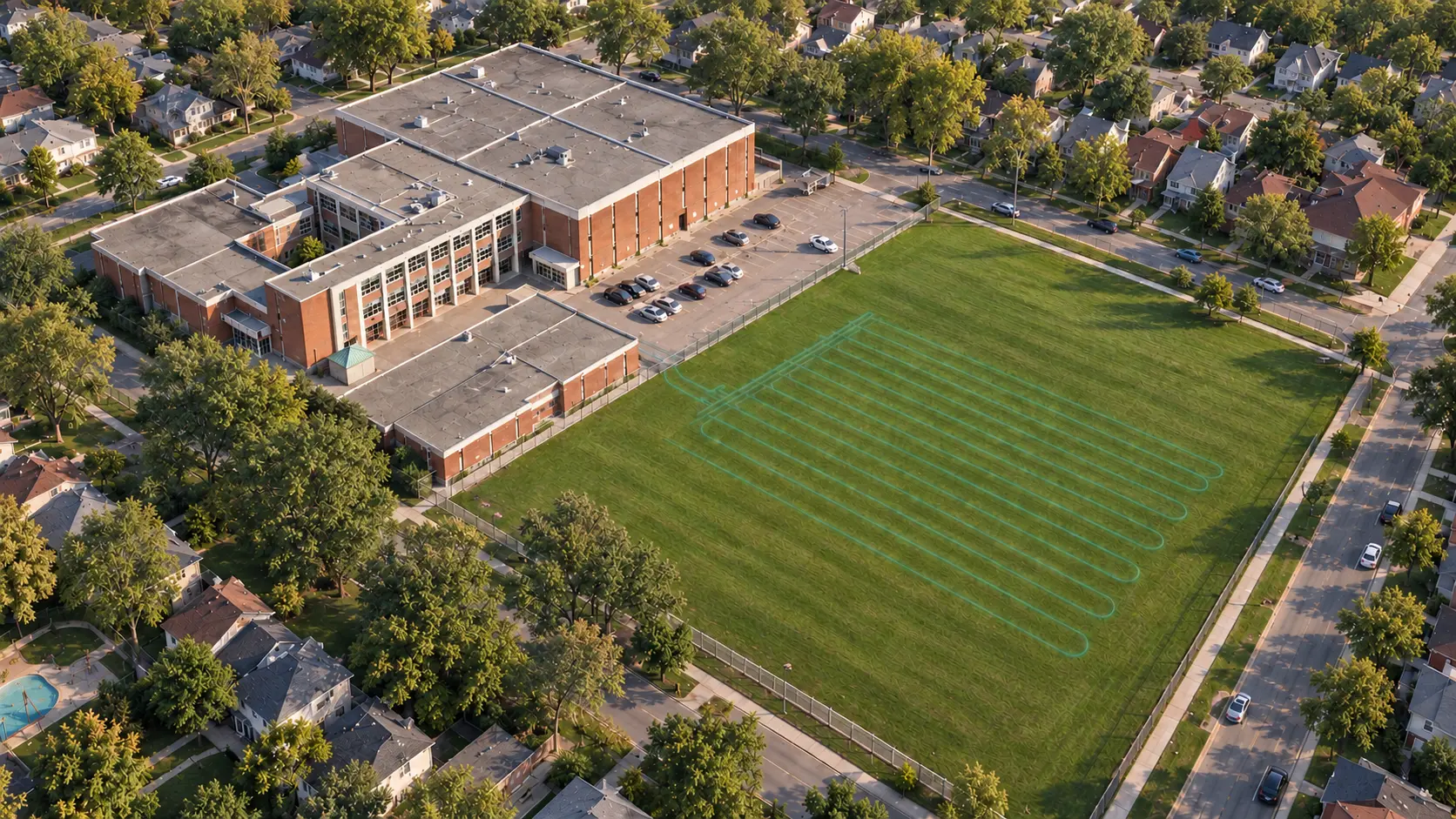
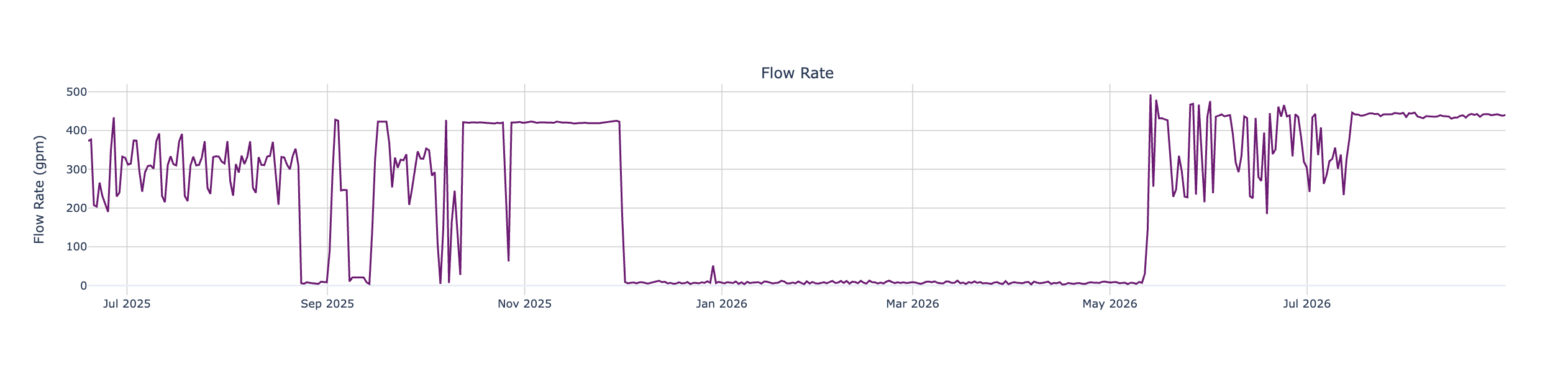
This 80,000 ft² school uses a hybrid ground-source heat pump (GSHP) system connected to a horizontal directionally drilled ground heat exchanger. A heat recovery chiller serves the building, while natural gas boilers provide backup heat during peak winter conditions.
On paper, the strategy is straightforward:
- During cooling, reject heat from the building into the ground.
- During heating, recover stored heat from the ground.
- Use the boilers when the geothermal system needs help meeting the load.
Winter heat extraction helps balance summer heat rejection and keeps ground-loop temperatures within a sustainable range.
The Problem: Temperatures Were Climbing
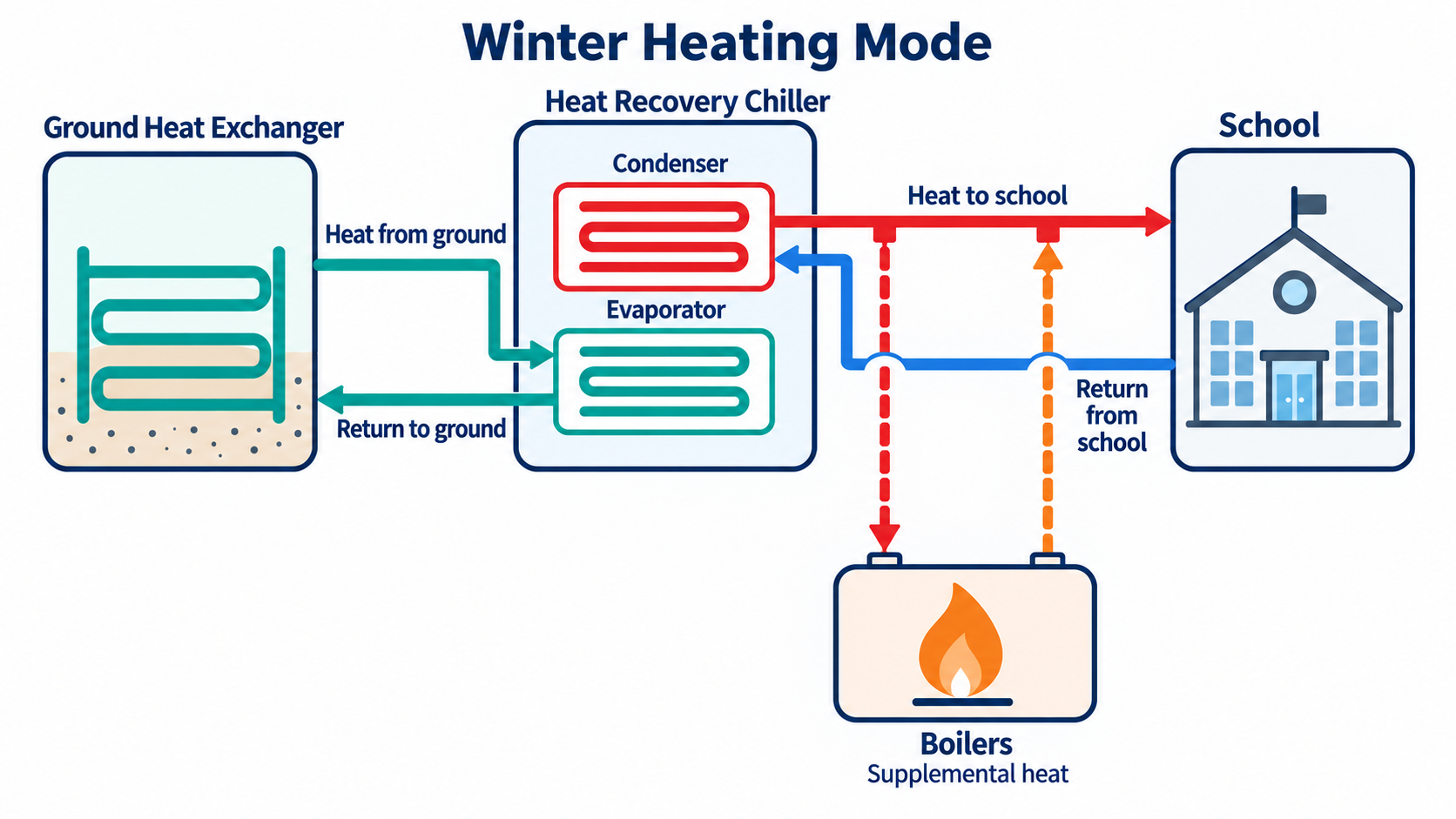
The Ensure® monitoring system revealed a concerning trend.
Summer loop temperatures had increased from approximately 110°F (43°C) in 2025 to approximately 130°F (54°C) in 2026, a rise of about 20°F (11°C).
The building was still receiving cooling, but the rising temperatures raised concerns about how reliably that could continue.
What Was Actually Happening
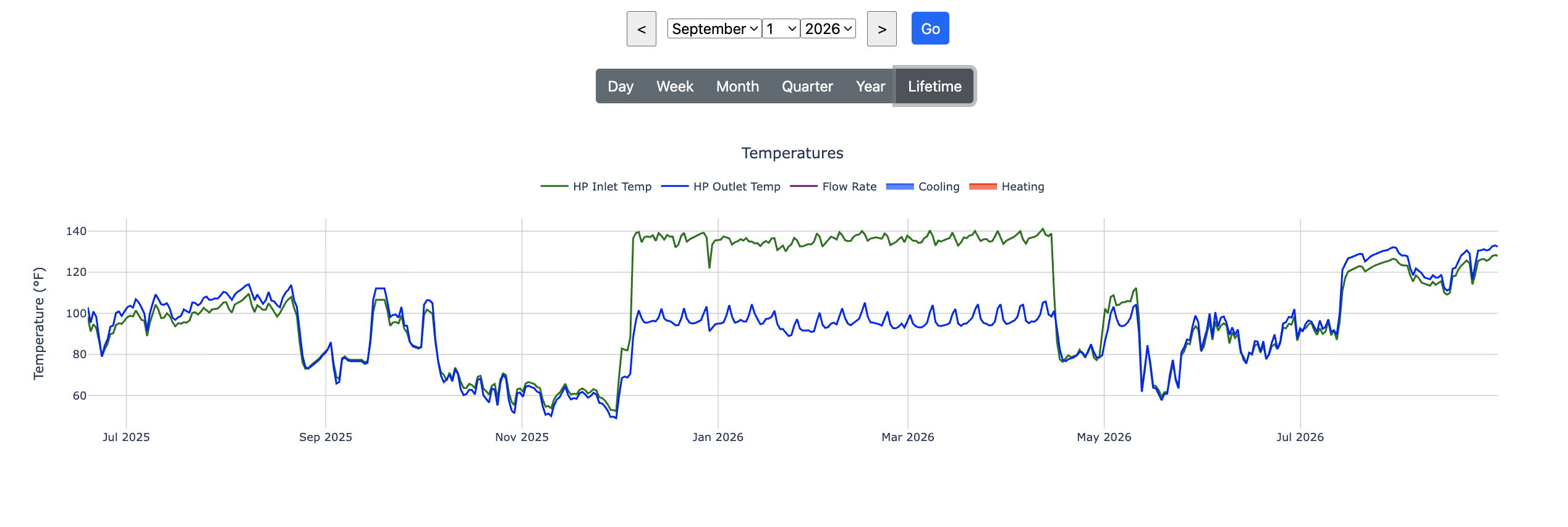
The temperature trend showed the warning. The flow data helped explain it.
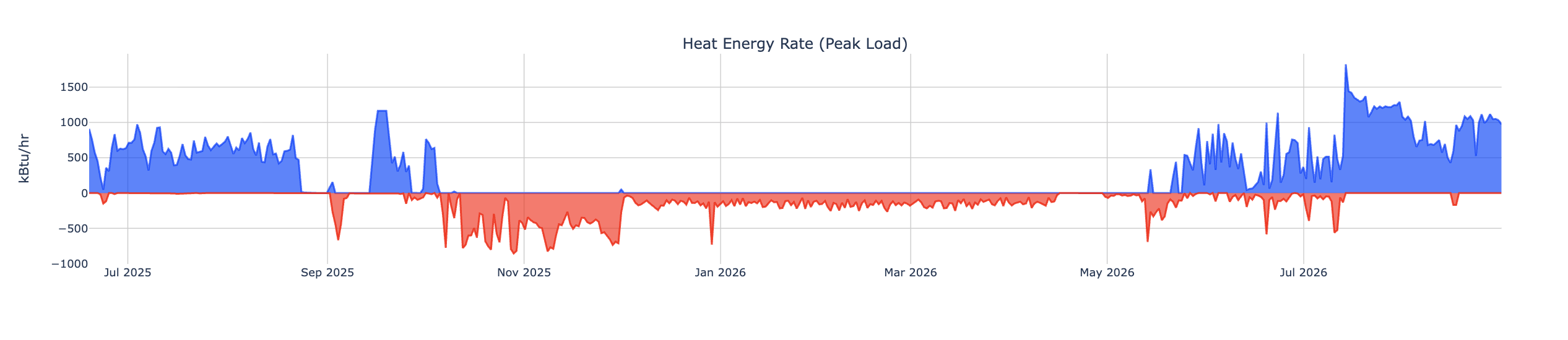
From approximately late November through mid-May, flow through the ground heat exchanger dropped to almost zero. During most of the heating season, the ground loop was largely inactive.
The boilers were carrying the heating load. They kept the school warm, but also displaced the winter heat extraction needed to help rebalance the ground.
The operating pattern had become clear:
- The system rejected heat into the ground during summer.
- It recovered little of that heat during most of winter.
- This imbalance allowed heat to accumulate, contributing to higher summer loop temperatures.
Because the building remained comfortable, the operating issue could easily go unnoticed.
The Corrective Strategy
The proposed correction is to restore the intended operating sequence:
- Let the geothermal system provide the base heating load.
- Extract heat from the ground during the heating season.
- Stage the boilers for peak loads or when the geothermal system reaches its operating limits.
- Continue monitoring to confirm increased winter heat extraction and track summer temperature recovery.
Control changes should respect the equipment’s limits. Follow-up monitoring will show whether they deliver the intended improvement.
The Takeaway
A geothermal system can keep a building comfortable while a long-term problem develops underground.
Here, monitoring connected rising summer temperatures with an inactive winter ground loop, providing an opportunity to correct the sequence before a cooling failure.
Backup heat should support the geothermal system, but not quietly replace it.
Building comfort alone does not tell the whole story.