Heating the Ground Instead of the Building
by GeoFease | March 31, 2026, 7 a.m.
The Setup
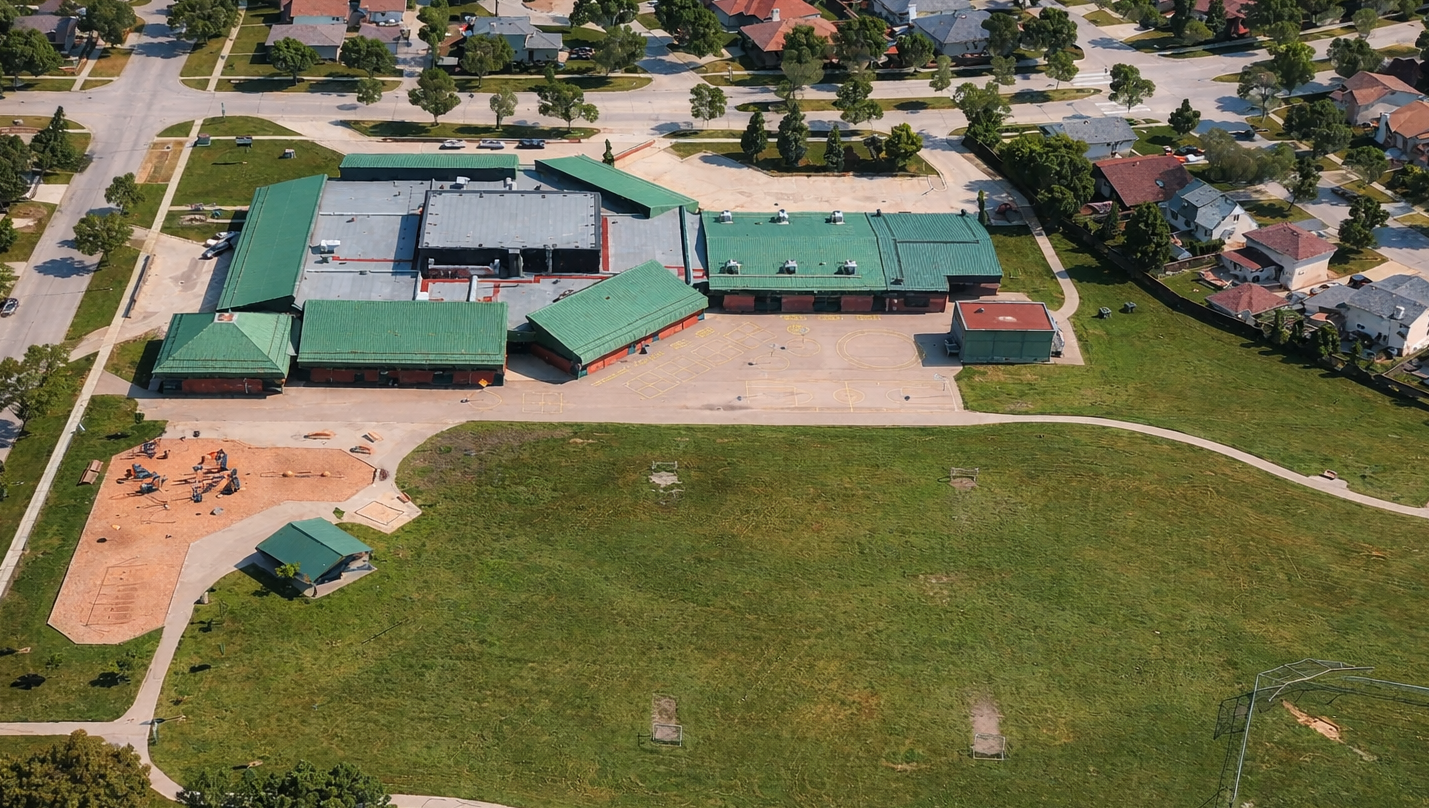
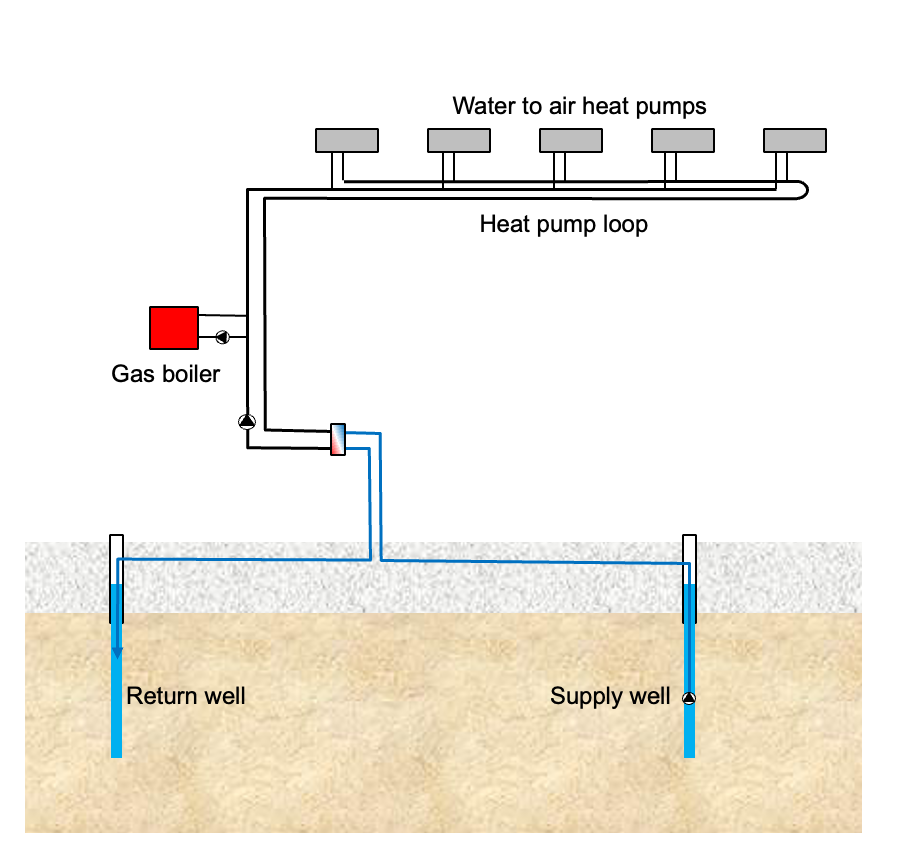
This 55,000 ft² school was equipped with a open loop geothermal system during its original construction (1988) and expansion (1990). A supply and return water well pair served a distributed network of water-to-air heat pumps throughout the building.
A natural gas boiler was included for peak heating conditions.
On paper, the system was straightforward: geothermal handles the load, and the boiler fills in only when needed.
The Problem: Something Was Off
After the Ensure® monitoring system was implemented, a long-term trend became clear.
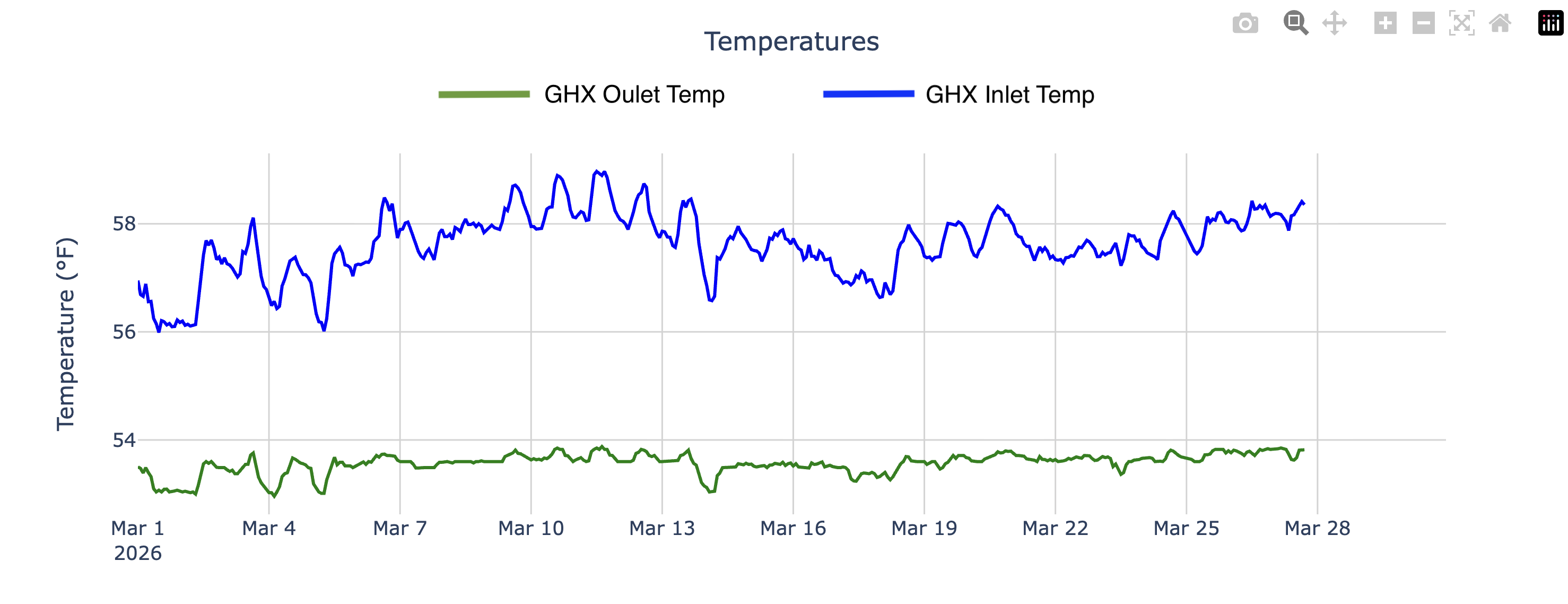
Groundwater temperatures had gradually increased from about 45°F (7°C) to roughly 58°F (14°C), a 12–13°F rise over 30 years.
That’s not what should happen.
In winter, the system should be extracting heat from the groundwater, not warming it. But the data—shown in the loop temperature chart below—indicated the opposite.
What Was Actually Happening
Once the system behavior was broken down and analyzed by the monitoring system, the issue became clear:
- The boiler was running more than necessary
- That added heat raised the loop temperature
- The heat pumps didn’t need that excess heat
- So they rejected it… back into the wells
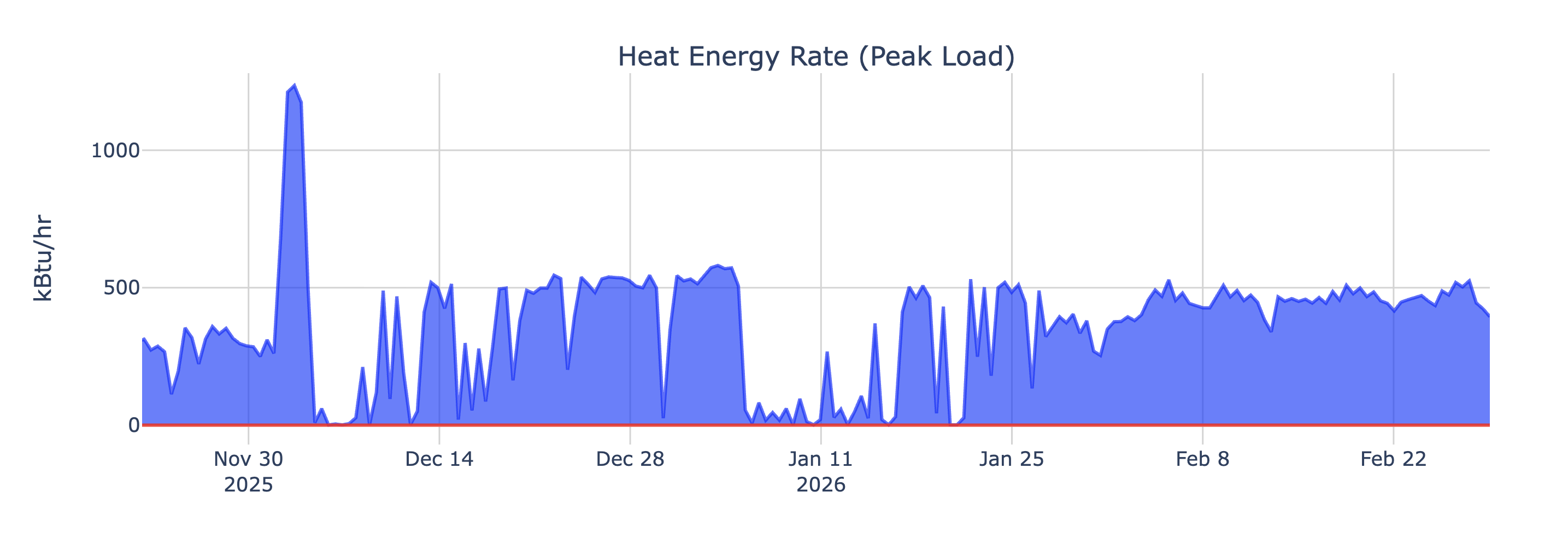
Instead of pulling energy from the aquifer, the system was using natural gas to heat the loop and then sending that heat straight into the ground.
The impact is visible in the energy data below, which shows sustained heat rejection to the wells during winter operation.
It’s worth noting: the heat pumps themselves were not the issue. They were designed to operate with entering water temperatures down to 40°F (4°C), well within expected conditions.
This wasn’t an equipment problem.
It was a control problem.
The Fix
Once identified, the correction was straightforward:
- Let the geothermal system lead
- Enable the boiler only if loop temperatures drop below ~38°F (3°C)
- Deactivate the well water pumps when the boiler is activated
- Avoid overheating the heat pump loop, which results in heat being rejected to the wells
The Takeaway
Nothing in this system is broken. It was simply operating in the wrong order.
Geothermal systems only work when they’re allowed to lead. If the backup system takes over too early, you don’t just lose efficiency, you can reverse the intended heat flow.
Backup heat should stay in the background.
Otherwise, you may find yourself paying to heat the ground instead of the building.